Heat is the deadliest weather-related threat older adults face—more dangerous, year over year, than hurricanes or flooding. In Lakeland, where summer temperatures regularly climb into the mid-90s with heavy humidity, that risk isn’t seasonal background noise. It’s a real health concern for the seniors and families we work with every day.
Summer safety for seniors in Lakeland means more than “drink water and stay inside.” Aging bodies regulate temperature less efficiently, sense thirst later, and are often managing chronic conditions or medications that change how heat affects them. This guide covers what actually keeps Lakeland seniors safe—hydration, heat-illness recognition, medication-specific risks, safe activity planning, and what to do if a heat emergency happens.
Why Summer Heat Is Riskier for Seniors
As the body ages, its ability to cool itself through sweating declines, and many seniors don’t register thirst the way they once did. The result: dehydration and heat-related illness can develop quickly, sometimes before a senior or their family notices anything is wrong. This is one of the core reasons heat safety for seniors is a year-round planning topic for caregivers, not just a summer checklist.
For families in Lakeland, this risk is compounded by long stretches of 90°F+ days combined with high humidity, which makes sweating a less effective cooling mechanism than it would be in a drier climate.
Staying Hydrated During Hot Weather
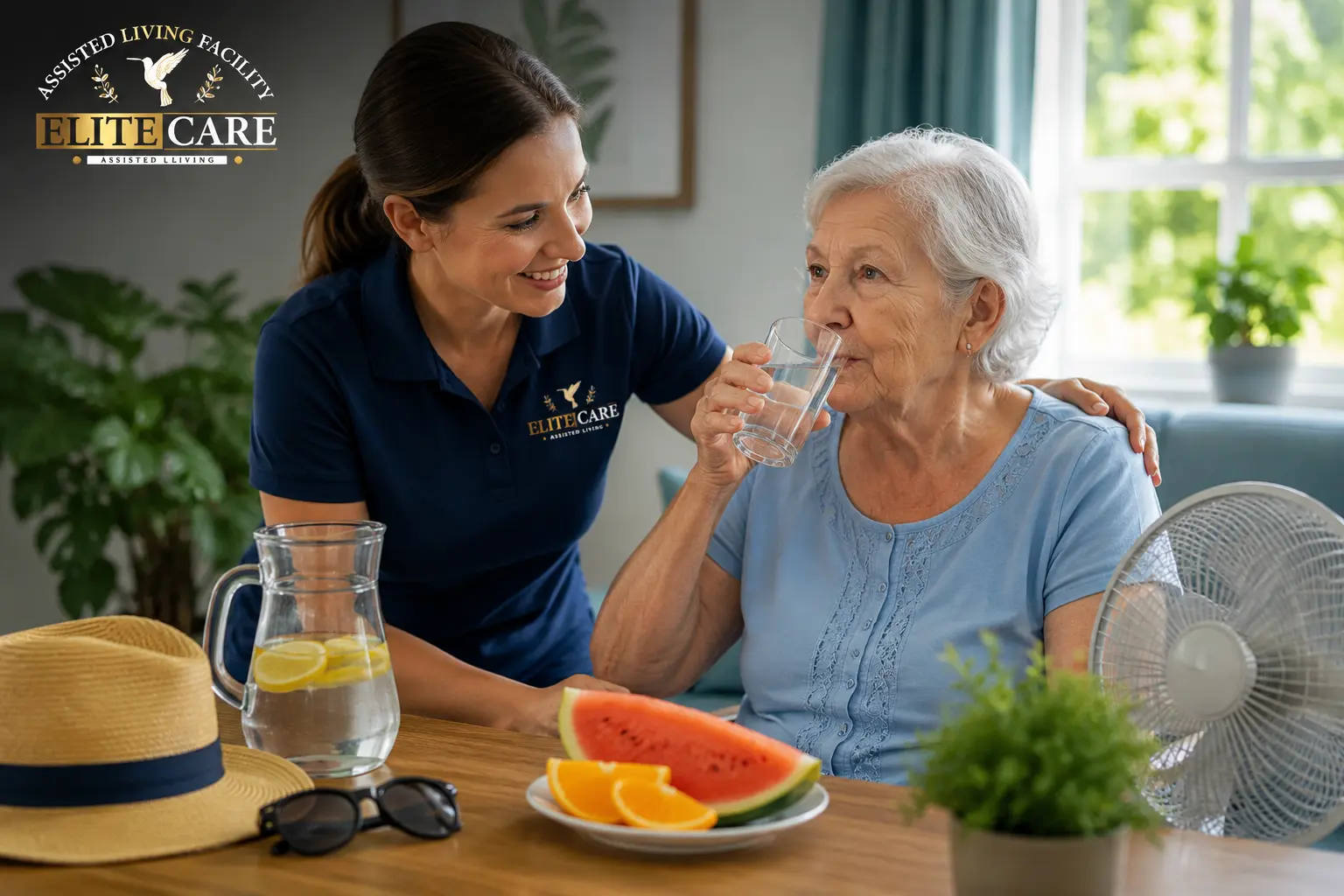
Hydration is the single most important defense against heat-related illness, and it’s also the easiest to overlook—many seniors simply don’t feel thirsty until they’re already behind on fluids.
Simple hydration habits that work:
Drink water consistently throughout the day, even without feeling thirsty
Add hydrating foods like watermelon, cucumber, and oranges to daily meals
Limit caffeine and alcohol, both of which speed up fluid loss
Keep water within easy reach in living areas, bedrooms, and porches
Use a marked water bottle to track intake across the day
At Elite Care, caregivers actively remind residents to drink fluids, offer electrolyte-rich drinks when appropriate, and track hydration as part of daily care routines—not as an afterthought.
Medications and Chronic Conditions That Raise Heat Risk
This is the part of summer safety that generic checklists skip, and it’s often the most important for families managing a loved one’s care.
Certain chronic conditions and medications change how a senior’s body handles heat:
Condition / Medication
Why It Raises Heat Risk
Diuretics (“water pills”)
Increase fluid loss, raising dehydration risk
Heart failure or heart disease
The body has less capacity to compensate for heat stress
Kidney disease
Impairs the body’s ability to regulate fluid and electrolyte balance
COPD
Hot, humid air can worsen breathing difficulty
Diabetes
Can affect sweating and circulation, both part of the body’s cooling response
Beta-blockers and some blood pressure medications
May blunt the body’s normal heat-response signals
If your loved one is on any of these, a quick conversation with their physician before summer heat sets in can help set safe fluid targets and activity limits. This is exactly the kind of coordination our caregivers handle as part of ongoing care plans.
Recognizing Heat Exhaustion vs. Heat Stroke
Knowing the difference matters—heat stroke is a medical emergency, heat exhaustion is not (yet).
Heat exhaustion warning signs:
Heavy sweating, cool or clammy skin
Dizziness, weakness, or fatigue
Nausea or headache
Rapid heartbeat
Heat stroke warning signs (seek emergency care immediately):
Body temperature above 103°F
Hot, dry skin OR heavy sweating that suddenly stops
Confusion, slurred speech, or loss of consciousness
Rapid, strong pulse
What to Do in a Heat Emergency
If you suspect heat exhaustion, move the person to a cool, shaded, or air-conditioned space, offer small sips of water, loosen tight clothing; and apply cool, damp cloths to the neck, wrists, and underarms. Symptoms should improve within 30 minutes — if they don’t, treat it as heat stroke.
If you suspect heat stroke, call 911 immediately. While waiting, move the person to a cooler area, remove excess clothing, and apply cool water or ice packs to the neck, armpits, and groin. Do not give fluids if the person is confused or losing consciousness.
Our staff is trained to recognize both conditions early and to act on this exact protocol—it’s part of daily supervision, not a once-a-summer refresher.
Safe Outdoor and Indoor Activities for Seniors
Staying active matters for physical and mental health, but summer means adjusting when and how seniors stay engaged, not cutting activity out altogether.
Safer outdoor options:
Short walks in early morning or evening, avoiding the 10 AM–4 PM peak heat window
Light stretching or gardening in shaded areas
Social time on covered porches or patios
Indoor alternatives: For days when outdoor activity isn’t safe, indoor engagement keeps seniors active without the heat risk — light exercise classes, book clubs, craft sessions, and video calls with family. We cover a full range of these options in our guide to indoor summer activities for seniors in Lakeland, which pairs well with the safety practices on this page.
Staying socially engaged matters too—isolation during hot months, when seniors are more likely to stay home, can affect mood and well-being as much as heat itself. If you’re looking for structured ways to keep a loved one active and connected through summer, our Activities and Events programs are built around exactly this kind of seasonal planning.
Local Cooling Resources in Lakeland and Polk County
During periods of extreme heat, Polk County and the City of Lakeland periodically open cooling centers for residents without reliable air conditioning. Libraries, senior centers, and community centers are also reliable places to spend an afternoon in air conditioning. Families should check with Polk County Emergency Management or the City of Lakeland for current cooling center locations and hours during active heat advisories.
If a loved one lives alone and doesn’t have consistent access to a cool environment, this is also a common reason families begin exploring respite care for the summer months—even short-term, it gives caregivers peace of mind that someone is monitoring hydration and heat exposure daily.
Real Summer Care Practices at Elite Care
Our approach isn’t generic—it’s built around real, daily senior care needs during Lakeland summers:
Staff trained to recognize early heat-related symptoms and respond immediately
Elite Care Assisted Living serves families across Polk County, including Winter Haven, Auburndale, Bartow, Plant City, Mulberry, Lakeland Highlands, Highland City, and Medulla—and our understanding of regional weather patterns shapes how we plan care through the hottest months of the year.
FAQs
1. How can seniors stay safe during extreme summer heat in Lakeland?
Seniors should drink water consistently throughout the day, avoid outdoor activity between 10 AM and 4 PM, wear lightweight clothing, and spend peak heat hours in air-conditioned spaces. Those on diuretics, heart medications, or with chronic conditions should talk to their doctor about summer-specific precautions.
2. What are the early signs of heat exhaustion in elderly adults?
Early signs include heavy sweating, dizziness, weakness, nausea, headache, and a rapid heartbeat. If symptoms don’t improve within 30 minutes of cooling down and hydrating, treat it as a possible heat stroke and seek emergency care.
3. How much water should seniors drink in hot weather?
There’s no single number that fits everyone—seniors with heart or kidney conditions may have fluid limits set by their doctor. Generally, small, consistent sips throughout the day work better than large amounts at once, even without feeling thirsty.
4. Is it safe for seniors to attend outdoor senior events in Lakeland during summer?
Yes, with planning—choose events held in the morning or evening, confirm shaded or air-conditioned seating is available, and bring water. Checking event details in advance is worth it for anyone managing a chronic condition.
5. How do assisted living facilities in Lakeland keep seniors safe in summer?
Assisted living communities like Elite Care provide scheduled hydration support, climate-controlled living spaces, supervised and time-limited outdoor activity, and staff trained to recognize heat-related symptoms early—reducing risks that are harder to manage for seniors living alone.
Conclusion
Summer in Lakeland can be enjoyable and safe for seniors when hydration, medication awareness, and heat illness recognition are part of the plan—not an afterthought. At Elite Care Assisted Living, summer safety for seniors in Lakeland is built into daily care, not treated as a seasonal talking point.
📍 Visit Us: 6017 Christina Dr E, Lakeland, FL 33813 📞 Call Now: 863-333-0311 📧 Email:elitegroupcare@gmail.com 🌐 Careers: elitegroupcare.com/career
Ourassisted living services in Lakeland cater to seniors and families, including:
Independent Seniors seeking social engagement and support
Seniors needing daily assistance with personal care or medication
Seniors with memory challenges like Alzheimer’s or dementia
Families needing respite or short-term care
Seniors with chronic health conditions requiring medical support
🌍 Our Service Area
At Elite Care Assisted Living, our commitment to seniors goes beyond Lakeland. We proudly serve families across nearby cities and close-knit communities, ensuring compassionate care is always within reach.
✨ Nearby Cities We Serve: Winter Haven · Auburndale · Bartow · Plant City · Mulberry 🏡 Local Communities We Serve: Lakeland Highlands · Highland City · Medulla · Fuller Heights
Wherever you are in Polk County and the surrounding areas, Elite Care is here to provide the personalized support, safety, and comfort your loved ones deserve.
💛 Because summer is about joy, community, and safety—for every senior.