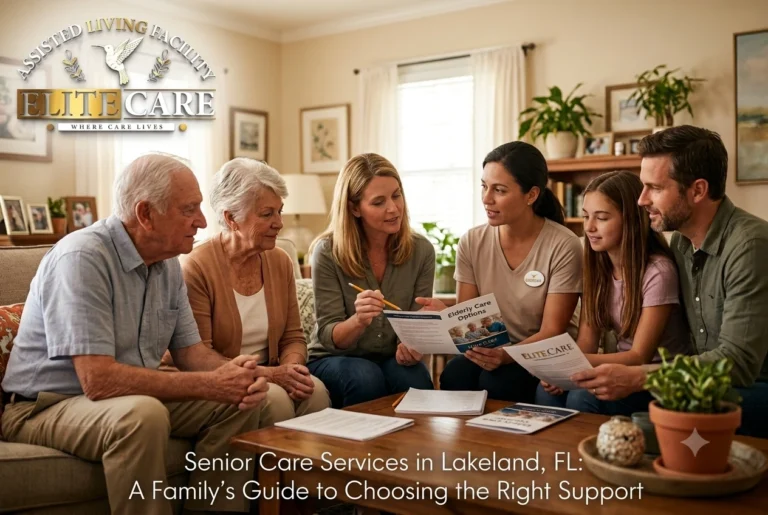
Choosing an assisted living facility in Florida is one of the most emotional and important decisions a family can make. You’re not just picking a building. You’re choosing a new chapter in your loved one’s life. If you’re still processing that decision emotionally, this guide on finding peace of mind may help before you start touring.
If you’re feeling overwhelmed, you’re not alone. Most families don’t know where to start. What should you look for? What should you avoid? How do you know if it’s the right fit?
This guide gives you clarity. You’ll learn the exact checklist Florida families should use, common mistakes to avoid, and what questions families should ask assisted living communities before signing anything.
Families in Lakeland, Winter Haven, and throughout Polk County often begin their search online before ever scheduling a visit to an assisted living facility in Florida. Florida’s official assisted living facility comparison tool is a good starting point for building your shortlist. This guide is designed to help you compare communities confidently and avoid making rushed decisions during stressful moments.
Common Mistakes Families Make
Choosing an assisted living facility in Florida is often done during stressful moments. Because of that, families sometimes make avoidable mistakes that lead to regret later.
Waiting for a crisis. Many families begin the search only after a fall, hospitalization, or caregiver burnout. This creates urgency and limits choices. Starting early allows time to compare options calmly.
Focusing only on price. While budget matters, choosing the lowest monthly rate at an assisted living facility in Florida can backfire if additional care services cost extra. Value, quality of care, and long-term suitability are more important than just base pricing.
Not touring multiple communities. Relying on online photos or a single visit to an assisted living facility in Florida doesn’t give a complete picture. Comparing several facilities helps families recognize differences in staffing, cleanliness, and resident engagement.
Ignoring future care needs. A facility that works today may not meet needs six months from now—this is one of the clearest signs it may be time for assisted living. Families often overlook how care needs may increase over time.
According to the Florida Agency for Health Care Administration (AHCA), every assisted living facility in Florida must operate under specific licensing categories that determine the level of care it can provide. Understanding these distinctions early prevents families from selecting a community that cannot legally meet future medical needs.
Licensing & Staff Questions
Licensing and staffing directly impact safety and care quality. Families should ask clear, direct questions before making a decision.
Licensing Questions:
Is the facility licensed in Florida and in good standing?
What type of license does it hold?
Have there been recent violations or corrective actions?
Staffing Questions:
What is the caregiver-to-resident ratio?
Is the staff available 24/7?
Are licensed nurses on-site or on-call?
What training do caregivers receive?
What is the staff turnover rate?
Stable leadership and well-trained staff are strong indicators of consistent care.
You can verify licensing status directly through the official AHCA facility locator. Reviewing inspection reports adds an extra layer of transparency before making a final decision.
Red Flags to Watch for in an AHCA Inspection Report
Every AHCA-licensed assisted living facility in Florida is inspected, and those reports are public. Before you tour, pull the report and look for:
Repeat violations on the same issue across multiple inspections
Unresolved complaints with no documented corrective action
Staffing citations, especially related to medication administration
A gap of more than 18–24 months since the last inspection
One or two minor, resolved citations are normal — most licensed communities have some. A pattern of the same violation recurring is the real warning sign.
Staff-to-Resident Ratio: What Actually Counts as “Good”?
A lower staff-to-resident ratio isn’t just a nice-to-have — it directly affects how quickly a call button gets answered and how personalized daily care actually feels. There’s no single statewide mandate on the exact number, which is exactly why families need to ask for it directly rather than assuming.
When comparing communities, request the daytime and overnight ratio—a facility can look well-staffed at 2 p.m. and be thin at 2 a.m. A consistent, lower ratio across both shifts is generally a stronger signal than a high headcount that only shows up during tour hours.
What to Ask About Cost Before You Sign
Most families budget $3,000–$5,000 a month for an assisted living facility in Florida, but the base rate rarely covers everything—memory care, medication management, and mobility assistance are often billed separately, so the number on the brochure isn’t always the number on the invoice.
Ask each community directly: What’s included in the base rate? Which services cost extra? Is there a waitlist if I’m relying on financial assistance?
(Florida Medicaid options like the MMA and LTC waiver can help offset costs for eligible seniors — see our full breakdown of senior care financial assistance programs for what’s available and how to apply.)
📞 Not sure where your loved one’s finances land? Contact Elite Care’s admissions team—we can walk you through what’s typically covered and what isn’t, no pressure.
Care Level Matching
Care level matching ensures the facility can properly support your loved one’s current and future needs.
Assess Current Needs:
Assistance with bathing, dressing, and mobility
Medication management
Chronic condition monitoring
Evaluate Medical Support:
Is nursing care available?
How are emergencies handled?
How often are care plans reviewed?
Memory Care Considerations: If dementia or cognitive decline is present, confirm whether specialized memory care services are offered at the assisted living facility in Florida you are considering. Not all assisted living facilities provide secure or structured memory programs.
Which License Type Actually Matches Your Loved One’s Needs?
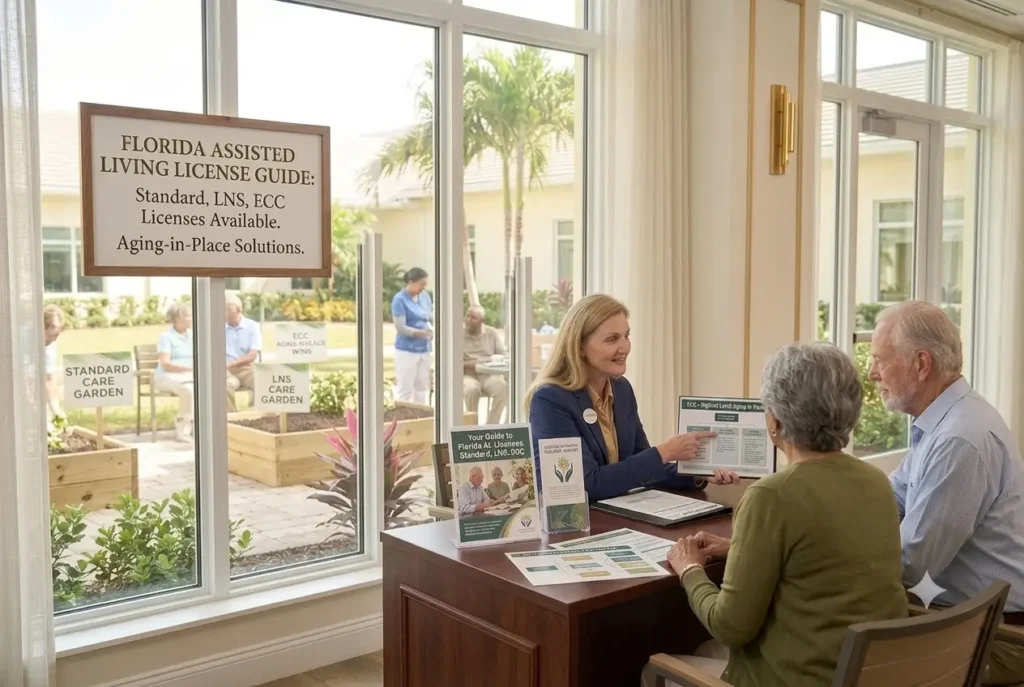
Not every assisted living facility in Florida holds the same license, and this is where families most often pick the wrong community. Ask specifically whether it offers:
Standard license — daily living support, medication management, still fairly independent residents
Limited Nursing Services (LNS) — allows a bit more hands-on nursing care without relocating
Extended Congregate Care (ECC)—the highest level within assisted living, lets residents age in place longer as needs increase
The license type directly determines how long your loved one can stay without a disruptive move later — it’s worth confirming before you fall in love with a community’s decor.
Choosing the wrong care level can result in relocation later, which can be emotionally and physically disruptive. See how assisted living compares to memory care to find the right fit.
In Florida, some assisted living communities offer Extended Congregate Care (ECC) or Limited Nursing Services (LNS), which allow residents to age in place longer. Asking whether these licenses are available can prevent unnecessary future moves.
Why Checklists Prevent Regret
Emotions often drive senior care decisions. A checklist brings structure and objectivity.
Creates Consistency: Using the same evaluation criteria for each facility allows fair comparison.
Reduces Emotional Pressure: Instead of relying on first impressions, families can focus on measurable factors like staffing, licensing, and safety and security protocols.
Prevents Overlooking Details: Contracts, fee structures, and emergency plans are easier to evaluate when written down.
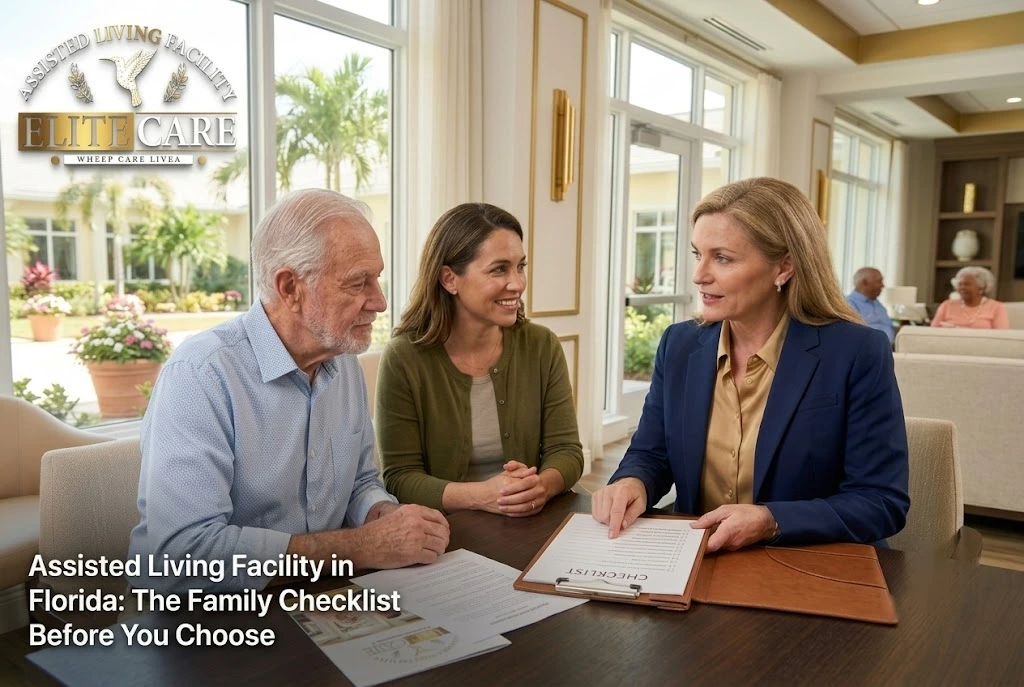
A checklist transforms uncertainty into clarity and helps families feel confident in their decision. Bringing a printed checklist to every assisted living tour in Florida ensures you ask the same questions at each community. This makes side-by-side comparisons easier when discussing options with other family members.
Trust Your Instincts: The Second-Visit Test
Licensing, staffing ratios, and inspection reports rule out the wrong communities. What confirms the right one is usually a second visit—ideally unannounced or timed around a meal or activity.
Ask yourself: Would your loved one still enjoy their favorite small routines here — morning coffee, a hobby, a weekly outing? Do residents seem engaged with each other or isolated? A community that scores well on paper but feels flat in person is worth a second look before you commit.
🏡 Ready to see it for yourself? Schedule a private tour at Elite Care—attend at mealtime if you can. There’s no pressure, just a chance to see daily life as it actually happens.
FAQs
1. How much does an assisted living facility cost in Florida?
Florida assisted living typically runs $3,000–$5,000/month depending on location and care level.
2. What services are included in assisted living in Florida?
Housing, meals, housekeeping, medication management, and daily-living assistance.
3. How do I check if an assisted living facility in Florida is licensed?
4. What questions should families ask during an assisted living tour?
Staffing ratios, emergency protocols, care-plan reviews, and hidden fees.
5. When is it time to consider assisted living?
When safety, missed medication, or caregiver burnout become regular concerns.
6. Can assisted living residents stay long-term?
Yes, if the facility’s license (e.g., LNS or ECC) matches their evolving care needs.
Schedule a Tour at Elite Care Assisted Living Facility
Choosing the right assisted living community is a big decision — and nothing compares to seeing it in person. At Elite Care Assisted Living Facility in Lakeland, families experience compassionate, resident-focused care backed by over 20 years of experience.
Fully licensed and regulated by the Florida Agency for Health Care Administration (AHCA License #14006), Elite Care proudly offers Limited Nursing Services (LNS) and Limited Mental Health (LMH) services—giving families confidence and peace of mind.
💛 Why Families Choose Elite Care
We provide a safe, welcoming environment where seniors receive personalized support tailored to their unique needs.
💛 Elite Care — Where memory care meets compassion and expertise in Lakeland, FL. Schedule your personal tour today and experience the difference firsthand.
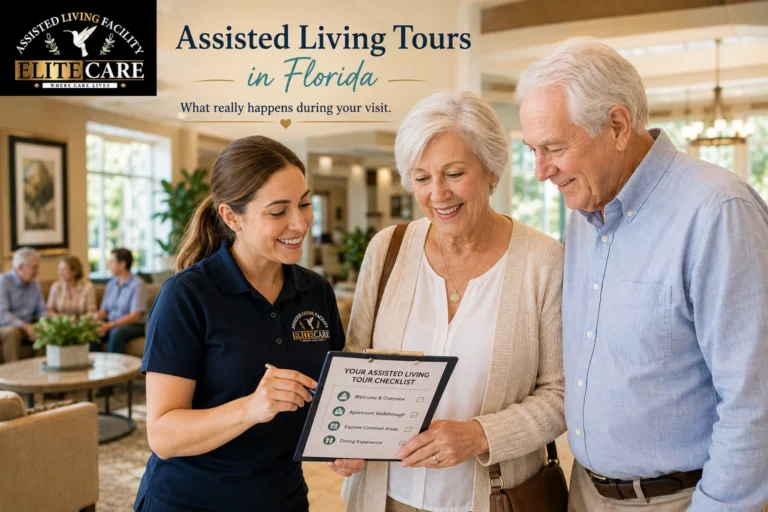
If you are comparing assisted living facilities in Lakeland or Polk County, we invite you to schedule a private tour and bring your checklist with you. There is no pressure — just an opportunity to see the environment, meet our caregivers, and ask questions in person. You can also explore what to expect on your first tour beforehand.