Heat Stroke Prevention guide for Seniors in Lakeland: What Families Need to Know First
Lakeland summers bring sunshine, outdoor activities, and opportunities for seniors to stay active. However, Florida’s intense heat and humidity can quickly become dangerous for older adults. Heat stroke is one of the most serious heat-related illnesses and can become life-threatening if not recognized and treated immediately.
The good news is that most heat-related emergencies are preventable. Understanding the warning signs, staying hydrated, avoiding excessive heat exposure, and creating a safe summer routine can significantly reduce risk.
At Elite Care Assisted Living, resident safety remains a top priority throughout the summer. Elite Care is licensed and regulated by the Florida Agency for Health Care Administration (AHCA License #14006). Families can view the facility profile through the Florida Health Finder website: https://quality.healthfinder.fl.gov/Facility-Provider/Profile/?LID=568309
For seniors living independently, with family, or in an assisted living community, heat stroke prevention should be a priority throughout the summer months.
Why Is Heat Stroke a Serious Risk for Seniors in Lakeland?
Heat Stroke Prevention Guide: Florida consistently experiences high temperatures and humidity levels during summer. While younger adults can often adapt to these conditions, seniors face unique challenges that increase their risk of heat exhaustion, dehydration, and heat stroke.
As people age, their bodies become less efficient at regulating internal temperature. Sweat production may decrease, circulation changes can affect cooling, and certain medical conditions may make it harder to respond to heat stress.
Many older adults also take medications that can increase dehydration or interfere with the body’s cooling process.
Common risk factors include:
Heart disease
Diabetes
Kidney disease
High blood pressure
Mobility limitations
Memory-related conditions
Certain prescription medications
This combination makes senior heat safety in Florida especially important during the hottest months of the year.
What Is the Difference Between Heat Exhaustion and Heat Stroke?
Many people use these terms interchangeably, but they are not the same.
Heat Exhaustion
Heat exhaustion occurs when the body loses excessive fluids and electrolytes through sweating.
Symptoms often include:
Heavy sweating
Fatigue
Dizziness
Weakness
Headache
Nausea
Muscle cramps
Cool or clammy skin
The good news is that heat exhaustion can often be reversed when recognized and treated early.
Heat Stroke
Heat stroke occurs when the body’s temperature regulation system fails.
This is a medical emergency that requires immediate treatment.
Symptoms may include:
Body temperature above 103°F
Hot skin
Confusion
Disorientation
Slurred speech
Rapid pulse
Loss of consciousness
Seizures
Without immediate medical care, heat stroke can lead to organ damage and death.
What Are the Early Signs of Heat Exhaustion in Elderly Adults?
Recognizing symptoms early is a key part of any Heat Stroke Prevention Guide and can help prevent a dangerous emergency.
Unfortunately, many seniors dismiss symptoms as normal fatigue or simply “feeling tired,” which can delay treatment and increase the risk of serious heat-related illness.
Family members and caregivers should watch for:
Unusual Fatigue
A senior who suddenly appears unusually tired after spending time outdoors may be experiencing heat-related stress.
Dizziness or Balance Problems
Heat can lower blood pressure and increase fall risks.
Increased Confusion
Confusion is often one of the earliest warning signs that the body is struggling to regulate temperature.
Excessive Sweating
Although some seniors sweat less than younger adults, noticeable sweating may indicate overheating.
Many seniors stop eating or drinking when they begin feeling overheated.
Knowing these signs of heat exhaustion in elderly adults can help families intervene before the condition worsens.
Why Are Lakeland Summers Especially Challenging for Older Adults?
Lakeland’s summer climate combines high temperatures with elevated humidity.
Humidity reduces the body’s ability to cool itself through sweating.
Even temperatures in the upper 80s can feel significantly hotter when humidity levels rise.
Additional local factors include:
Strong afternoon sun exposure
Outdoor community events
Gardening activities
Walking routines
Increased risk of dehydration
Many seniors underestimate how quickly Florida weather can affect their health.
Even a short period outdoors without proper hydration can create health concerns.
How Much Water Should Seniors Drink During Summer?
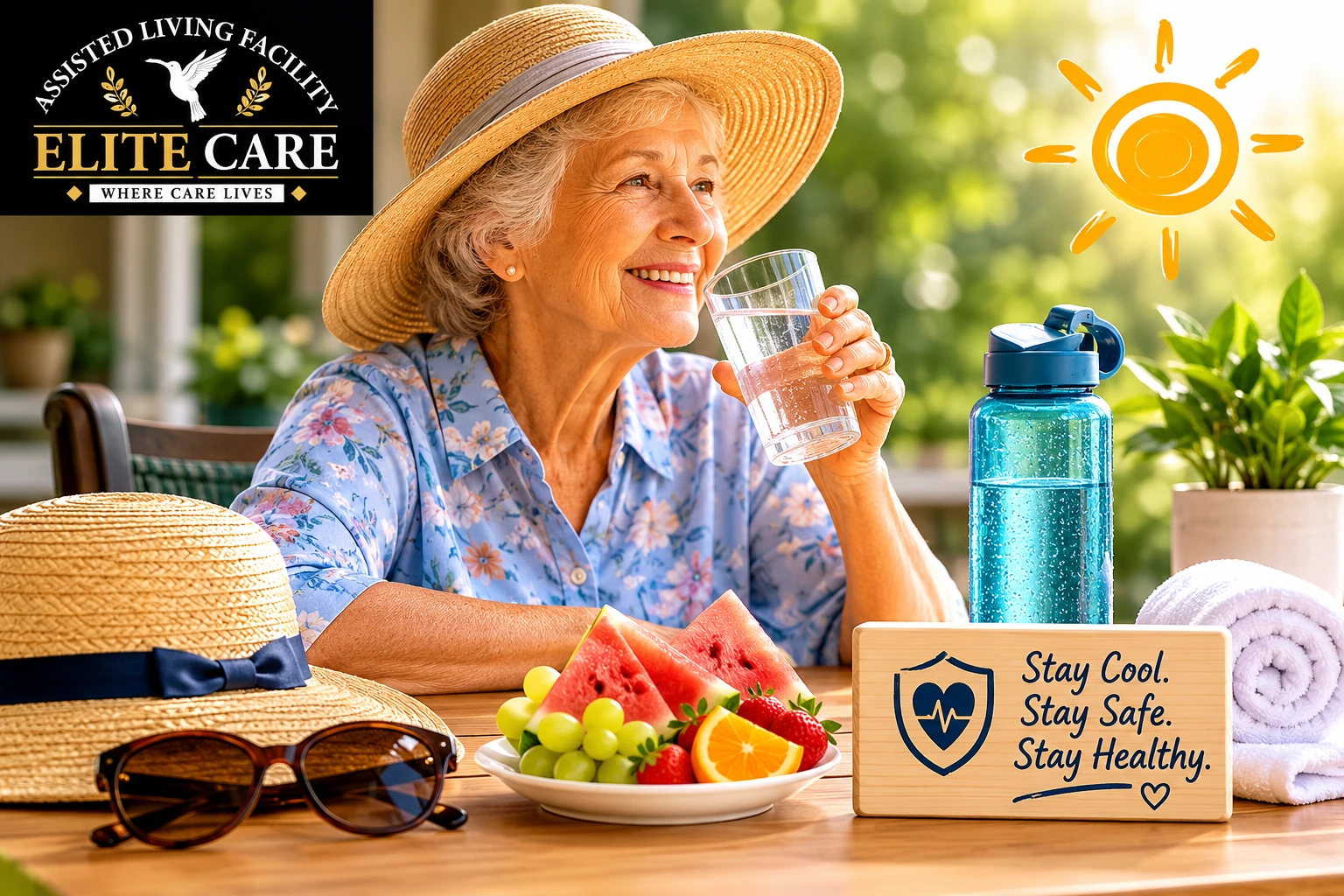
Hydration is one of the most effective ways to prevent heat-related illness.
A common misconception is that thirst is a reliable indicator of dehydration.
In reality, older adults often experience a reduced sensation of thirst.
By the time a senior feels thirsty, dehydration may have already begun.
Helpful hydration tips include:
Drink water throughout the day
Carry a reusable water bottle
Consume water-rich fruits
Avoid sugary beverages
Limit caffeine
Reduce alcohol intake
Foods that support hydration include:
Watermelon
Strawberries
Cucumbers
Celery
Oranges
Lettuce
Proper nutrition also supports hydration. Families can learn more through our guide on nutritious dining options for seniors in assisted living.
What Clothing Helps Seniors Stay Cool During Summer?
The right clothing can significantly improve comfort and reduce overheating.
Recommended clothing includes:
Lightweight cotton fabrics
Moisture-wicking materials
Loose-fitting shirts
Light-colored clothing
Wide-brim hats
UV-protective sunglasses
Dark clothing absorbs more heat and should be avoided during outdoor activities.
Comfortable footwear is equally important since heat can contribute to fatigue and balance issues.
When Is the Safest Time for Seniors to Go Outdoors?
Timing matters.
The hottest period of the day is typically between 11 a.m. and 4 p.m.
Whenever possible, seniors should schedule outdoor activities:
Early Morning
Morning temperatures are usually cooler and more comfortable.
Late Evening
After sunset, temperatures begin to decrease and outdoor conditions improve.
Outdoor activities may include:
Walking
Gardening
Visiting parks
Social gatherings
Light exercise
Avoiding midday heat is one of the simplest and most effective prevention strategies.
How Can Assisted Living Communities Help Prevent Heat Stroke?
Professional senior care communities often implement multiple safeguards during summer.
These may include:
Climate-Controlled Living Spaces
Consistent indoor temperatures help reduce exposure to dangerous heat.
Hydration Monitoring
Staff encourage regular fluid intake throughout the day.
Indoor Recreational Activities
Residents remain socially engaged without excessive outdoor exposure.
Wellness Monitoring
Caregivers can quickly identify warning signs before they become emergencies.
Nutritional Support
Balanced meals support hydration and overall wellness.
At Elite Care Assisted Living, summer safety is part of a comprehensive approach to resident wellbeing.
How Can Family Caregivers Reduce Heat Risks?
Family members play an important role in heat stroke prevention.
Simple daily actions can make a significant difference.
Check In Frequently
A quick phone call or visit can help identify symptoms early.
Monitor Water Intake
Many seniors do not realize how little they are drinking.
Verify Air Conditioning Is Working
Ensure cooling systems are functioning properly.
Review Medications
Discuss heat-related concerns with healthcare providers.
Encourage Indoor Activities
Consider puzzles, games, crafts, reading, or social events during extreme heat days.
These small efforts can dramatically improve summer safety.
Which Seniors Face the Highest Risk of Heat Stroke?
As highlighted throughout this Heat Stroke Prevention Guide, while all older adults should take precautions, certain groups face greater risks of heat-related illnesses than others.
Higher-risk seniors include those who:
Live alone
Have dementia or Alzheimer’s disease
Have cardiovascular conditions
Take diuretics
Have mobility limitations
Experience chronic dehydration
Have kidney disease
Families should pay extra attention to these individuals during heat advisories.
Can Social Isolation Increase Heat-Related Risks?
Yes. Many heat-related emergencies occur because seniors are alone when symptoms develop.
Social interaction can act as a protective factor.
Regular contact allows others to notice:
Changes in behavior
Confusion
Fatigue
Physical distress
Strong social connections support both physical and emotional wellbeing.
What Indoor Activities Help Seniors Stay Active During Hot Weather?
Staying indoors does not mean becoming inactive.
Many enjoyable activities can keep seniors engaged while avoiding excessive heat exposure.
Popular options include:
Board games
Reading clubs
Arts and crafts
Gentle stretching
Chair exercises
Music programs
Movie afternoons
Group discussions
Maintaining activity levels supports both mental and physical health.
What Should You Do If a Senior Shows Signs of Heat Stroke?
Heat stroke is an emergency.
Take immediate action.
Step 1: Call 911
Professional medical assistance is required immediately.
Step 2: Move to a Cool Environment
Bring the person indoors or into an air-conditioned space.
Step 3: Cool the Body
Apply cool water to the skin and use fans to increase airflow.
Step 4: Remove Excess Clothing
Loosen clothing to improve cooling.
Step 5: Monitor Responsiveness
Stay with the individual until emergency responders arrive.
Do not delay treatment.
Every minute matters during a heat stroke emergency.
How Can Seniors Enjoy Summer Safely in Lakeland?
Summer can still be enjoyable with proper precautions.
The goal is not to avoid activities entirely but to participate safely.
Successful heat stroke prevention for seniors includes:
Consistent hydration
Smart scheduling
Comfortable clothing
Climate-controlled environments
Social engagement
Nutrition support
Caregiver monitoring
By taking these steps, seniors can continue enjoying the season while protecting their health.
Final Thoughts on Heat Stroke Prevention for Seniors
As this Heat Stroke Prevention Guide highlights, heat stroke is one of the most preventable summer health emergencies affecting older adults. Awareness, preparation, and daily preventive habits can dramatically reduce risk.
Whether a senior lives independently, receives home care, or resides in an assisted living community, maintaining hydration, recognizing warning signs, and avoiding prolonged heat exposure are essential.
Families who stay proactive can help their loved ones enjoy a safer, healthier, and more comfortable summer in Lakeland.