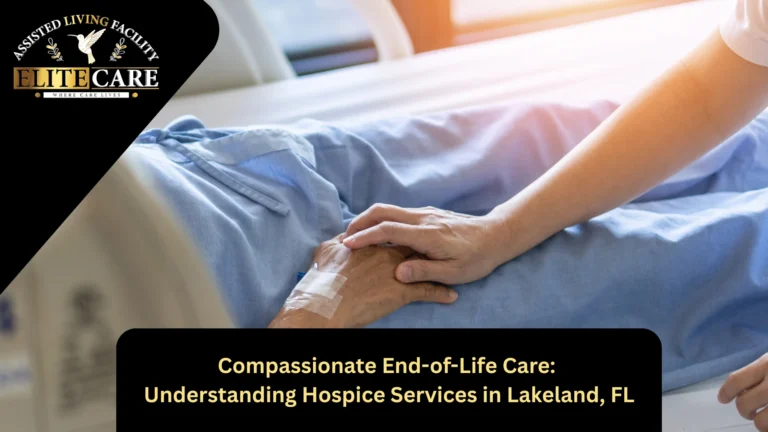
Choosing hospice care in Lakeland is one of the most important decisions a family can make — and pain management is almost always the first question families ask. At Elite Care Assisted Living, we coordinate hospice and palliative care for our residents in partnership with Lakeland’s leading hospice providers, so every resident receives comfort, dignity, and expert pain relief during life’s most sensitive moments.
Whether your loved one is living with cancer, kidney failure, or a neurological disease like Parkinson’s or ALS, our team works alongside licensed hospice clinicians to build a personalized pain-relief plan—combining medical treatment with emotional and spiritual support.
To better understand how pain is managed during hospice care, we spoke with Michele Sandoval, regional director with Chapters Health Hospice in north central Florida. With nearly a decade of experience in palliative and hospice care, Michele shared insights our team uses every day when coordinating hospice services for Lakeland families.
50 million+ Americans currently live with chronic pain—making expert pain management one of the most critical pillars of quality hospice care.
Hospice vs. Palliative Care: What’s the Difference?
Families searching for hospice care in Lakeland often ask how it differs from palliative care—the terms get used interchangeably, but they aren’t the same thing.
- Palliative care focuses on relieving pain and symptoms at any stage of a serious illness, even alongside curative treatment. It can begin the day of diagnosis.
- Hospice care is a specific type of palliative care for patients with a terminal diagnosis and a life expectancy of six months or less when curative treatment has stopped, and the focus shifts fully to comfort.
At Elite Care, residents can transition between palliative support and full hospice care without leaving the community they know—our care team coordinates directly with hospice partners so the change is seamless for the resident and the family.
End-of-Life Care Options in Lakeland, FL
Families in Lakeland have several settings to choose from for end-of-life care: at home, in a dedicated hospice house, or within an assisted living community like Elite Care. Many families choose to keep their loved one in their assisted living residence because it means the following:
- No disruptive move during an already difficult time
- Familiar staff and surroundings, which reduces anxiety and confusion — especially important for residents with dementia
- 24/7 on-site support from Elite Care’s caregiving team, layered with visits from the hospice clinical team
- Coordinated care planning between Elite Care staff, the hospice provider, and the family
This is the model Elite Care uses for every resident who needs end-of-life care: your loved one stays in the community they’ve come to know, while we bring hospice-level pain management and comfort care to them.
How Pain Is Managed During Hospice Care
Hospice teams serving Lakeland families address four primary types of pain, each requiring a different clinical approach.
Chronic Pain
Chronic pain persists over time and commonly affects patients with cancer, liver disease, and neurological disorders. Treatment typically starts with acetaminophen or NSAIDs, escalating to Tramadol or low-dose opioids as needed, and morphine or oxycodone in advanced cases. Emotional and psychological health matters too—as Michele Sandoval explains: “Sometimes we add anti-anxiety or anti-depression medications. Pain isn’t always physical—it can be spiritual or emotional too.”
Acute Pain
Acute pain comes on suddenly, often triggered by surgery or injury, and typically resolves quickly. Hospice teams address it with NSAIDs, ice or heat therapy, and mild pain relievers—aiming for fast relief without unnecessary medication.
Neuropathic Pain
Nerve damage causes neuropathic pain, which patients often describe as burning, stabbing, or tingling. It’s common in conditions like Parkinson’s and ALS. Hospice clinicians manage it with Gabapentin, Lyrica, and topical treatments like lidocaine patches, monitoring closely to relieve pain without overmedicating.
Nociceptive Pain
Arthritis and injuries commonly cause nociceptive pain. Care teams start with anti-inflammatory medications, adding mild opioids, physical therapy, or nerve blocks if pain worsens—always aiming to minimize discomfort while preserving the patient’s clarity and peace.
Compassionate Pain Relief — Beyond Medication
A common myth about hospice is that patients receive heavy sedation. That isn’t true. Hospice teams don’t default to opioids—they draw on a wide range of comfort therapies first.
“We use music therapy, aromatherapy, prayer, and repositioning for immobile patients,” says Michele Sandoval. Families receive full education on every treatment option so care aligns with their personal beliefs and values.
Dr. Andrea Enzinger of Dana-Farber Cancer Institute reinforces this approach: fear of opioid addiction is understandable, but it shouldn’t drive care decisions—especially in advanced disease, where the goal is comfort, not long-term dependency risk.
Additional non-medication therapies—guided relaxation, massage, and chaplaincy services—work alongside clinical pain management to meaningfully improve quality of life. If your family is also managing caregiver fatigue during this time, Elite Care’s respite care services can provide short-term relief so you can rest while your loved one continues to receive attentive care.
Hospice Care and Memory Care: A Special Consideration
Many families researching hospice care in Lakeland are also caring for a loved one with Alzheimer’s or another form of dementia. Pain assessment looks different for residents who can’t always verbally communicate discomfort—hospice teams and Elite Care’s specialized memory care staff work together to recognize non-verbal pain cues (agitation, changes in appetite, and restlessness) and adjust care plans accordingly.
Hospice Care Statistics: What Lakeland Families Should Know
- Over 50 million Americans live with chronic pain—a leading reason for hospice enrollment.
- Florida ranks among the top states for hospice utilization, reflecting strong demand in communities like Lakeland.
- Patients who enroll in hospice early consistently report higher quality of life than those who enroll late.
- The National Hospice and Palliative Care Organization (NHPCO) reports over 1.7 million Medicare beneficiaries enrolled in hospice recently, with pain management cited as the top benefit by families.
- Hospice care is typically covered by Medicare, Medicaid, and most private insurance for eligible patients, at little to no direct cost to the family.
Frequently Asked Questions
What is the difference between hospice and palliative care in Lakeland, FL? Palliative care manages pain and symptoms at any stage of a serious illness, even during curative treatment. Hospice care is palliative care specifically for patients with a terminal diagnosis who have stopped curative treatment, typically with a life expectancy of six months or less.
Does Elite Care coordinate hospice services for residents? Yes. Elite Care partners directly with licensed hospice providers, including Chapters Health, to bring hospice-level pain management, nursing visits, and comfort care to residents on-site—so families don’t have to choose between quality hospice care and staying in a familiar community.
What types of pain does hospice care treat? Hospice care treats chronic pain (cancer, liver disease), acute pain (injury or surgery), neuropathic pain (Parkinson’s, ALS), and nociceptive pain (arthritis). Each resident receives a personalized treatment plan focused on comfort and dignity.
Does hospice care automatically mean opioids? No. Hospice teams start with the mildest effective option—like acetaminophen or NSAIDs—and escalate only when necessary, alongside non-medication therapies like music therapy, aromatherapy, and massage.
Is emotional or spiritual pain addressed in hospice care? Yes. Hospice care treats pain as physical, emotional, and spiritual—including chaplaincy, counseling, and, if needed, anti-anxiety or anti-depression medication as part of whole-person care.
How much does hospice care cost in Lakeland, FL? Hospice care is typically covered at little to no cost through Medicare, Medicaid, or private insurance for eligible patients. Elite Care’s team can help families understand coverage during a free consultation.
Compassionate Hospice Care in Lakeland, FL, with Chapters Health
Pain doesn’t have to define your loved one’s final chapter—but achieving real comfort requires the right care team behind them. At Elite Care Assisted Living, we coordinate hospice care in Lakeland, FL, that combines expert pain management, emotional support, and spiritual care, all delivered in the familiar surroundings of our community. Our team works hand-in-hand with hospice partners like Chapters Health to make sure your loved one — and your family — never face this journey alone.
📍 Visit Us: 6017 Christina Dr E, Lakeland, FL 33813
📞 Call Now: 863-333-0311
📧 Email: elitegroupcare@gmail.com
📠 Fax: 863-333-0244
🌐 Explore Careers: elitegroupcare.com/career
📱 Follow Us: Facebook | Instagram
Schedule your free consultation today to discuss hospice and palliative care options for your loved one at Elite Care.