Introduction — Why Assisted Living for Seniors Living Alone Matters More Than Ever
Assisted living for seniors living alone has become one of the most important conversations families are having today. If your parent or loved one lives by themselves in Lakeland, Winter Haven, Bartow, or anywhere across Polk County, you’ve probably found yourself running through the same worries: Is it still safe for them to be home alone? Is their nutrition being managed properly? Has anyone confirmed their medications are being taken correctly?
The Reality of Aging Alone in Lakeland
Many older adults value their independence, and rightly so. However, independence can quietly turn into isolation and increased risk — often without a single dramatic moment to signal the shift. In fact, families searching for “elderly living alone risks,” “when is it unsafe for seniors to live alone,” or “signs it’s time for assisted living” are often surprised at how quickly small warning signs can escalate into a health or safety crisis.
This guide walks through the real risks of seniors aging alone, a self-assessment checklist you can use today, how assisted living compares to staying at home, and how communities like Elite Care Assisted Living in Lakeland provide structured safety, social connection, and daily monitoring—while preserving dignity and independence.
What Are the Biggest Risks of Seniors Living Alone?
Living alone may seem manageable — until something goes wrong. The risks fall into five categories: physical safety, medication management, financial vulnerability, technology gaps, and emotional health.
Are Falls a Serious Risk for Seniors Living Alone?
Yes. Falls are one of the leading causes of injury among older adults, and the danger multiplies when no one is nearby to help. When a senior lives alone:
No one hears the call for help
No one notices immediately
Hours can pass before assistance arrives
Immediate response makes a critical difference in outcomes. Fall risk increases further with poor lighting, loose rugs, stairs, and bathroom hazards — all common in homes that were never modified for aging in place.
How Do Medication Errors Put Seniors Living Alone at Risk?
Managing multiple prescriptions on your own gets harder with age. Missed doses, double doses, or incorrect timing can lead to serious complications, confusion, and hospital visits. Without daily supervision, medication routines often become inconsistent—and small mistakes compound over weeks before anyone notices.
Are Seniors Living Alone at Risk of Financial Scams?
Yes, and this risk is frequently overlooked. Isolated seniors are a common target for phone, mail, and online scams — impersonation calls, fake Medicare or insurance offers, and fraudulent contractors. Family caregivers researching senior assistance programs and cost-saving options should also watch for the following:
Unusual or unexplained bank withdrawals
Unopened bills or notices of late payments
New “friends” or callers requesting money or gift cards
Confusion about existing insurance or Medicare coverage
A senior isolated from regular family contact has fewer people positioned to catch these warning signs early.
How Does Technology Create Safety Gaps for Seniors Living Alone?
Many seniors struggle with smartphones, video calls, online bill pay, and telehealth portals. This “digital divide” isn’t just an inconvenience—it can delay medical care, cut off access to emergency alert systems, and make it harder for family to check in remotely. A senior who can’t confidently use a phone to call for help is at meaningfully higher risk during a fall or medical event.
What Is the Emotional and Health Impact of Loneliness in Seniors?
Loneliness is not just emotional discomfort — it directly affects heart health, immune function, cognitive health, and depression risk. Chronic isolation increases the likelihood of memory decline and emotional instability. Senior loneliness solutions, from structured social programs to regular family visits, are essential, not optional.
Self-Assessment Checklist: Is It Still Safe for Your Loved One to Live Alone?
Use this quick checklist to evaluate whether your parent or loved one may need additional support. If you check three or more boxes, it’s a good time to start exploring options.
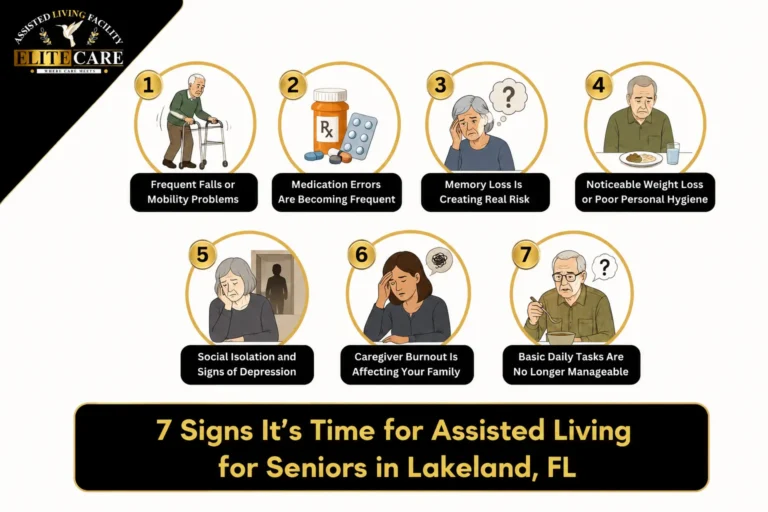
Missed medication doses or visibly confused pill organization
Unexplained bruises or a recent fall (even a “minor” one)
Unopened mail piling up or missed bill payments
Noticeable weight loss or an empty, disorganized refrigerator
Increased confusion, repetition, or memory lapses
Difficulty using a phone to call for help or attend a telehealth visit
Growing isolation — fewer calls, visits, or outside activities
Repeated hospital visits or ER trips in the past year
You (the caregiver) feel constant worry, fatigue, or stress about their safety
This checklist isn’t a diagnosis; it’s a starting point for a family conversation.
Assisted Living vs. Staying at Home: A Side-by-Side Comparison
Factor
Living Alone at Home
In-Home Caregiver
Assisted Living (Elite Care, Lakeland)
Emergency response
Delayed — depends on who checks in
Only during scheduled visits
24/7 on-site staff supervision
Medication management
Self-managed, error-prone
Partial, visit-dependent
Daily, supervised
Social interaction
Minimal, depends on outside visits
Limited to caregiver visits
Daily group activities and shared dining
Cost predictability
Variable (repairs, modifications, emergencies)
Hourly, can add up quickly
Often more predictable, all-inclusive
Nutrition
Self-prepared, often inconsistent
Depends on caregiver hours
Structured, monitored meals
Costs vary depending on individual care needs, but when factoring in emergency visits, home modifications, and multiple in-home services, assisted living is often comparable — and sometimes more predictable — than piecing together home-based support.
How Does Assisted Living in Lakeland Provide Safety and Monitoring?
Assisted living shifts seniors from risk to reassurance through structured daily support.
24/7 Staff Supervision
Trained caregivers are present around the clock. Residents maintain independence but have immediate assistance when needed.
Medication Management
Staff ensures medications are taken correctly and on time, reducing dangerous errors. Families can explore our detailed medication management services for additional support options.
Routine Wellness Monitoring
Regular observation helps identify subtle changes in behavior, appetite, or mobility before they become medical emergencies. Daily monitoring prevents small concerns from becoming major health crises.
How Does Assisted Living Reduce Isolation and Loneliness?
One of the most powerful benefits of assisted living for seniors living alone is built-in companionship.
Group Activities and Local Engagement
Exercise classes, art sessions, games, and social programs create natural daily interaction. Residents take part in the kind of structured senior activities and events that many families search for locally — without needing to arrange transportation or coordination themselves. See our full calendar of activities and events.
Shared Dining
Meals become opportunities for conversation instead of silent routines at home.
Community Connection
Holiday events, educational programs, and shared experiences rebuild social confidence and purpose. Community living replaces isolation with meaningful connection, supporting mental clarity, emotional stability, and long-term cognitive resilience.
Signs of Caregiver Burnout: When Family Support Isn’t Enough
It’s not just the seniors’ well-being at stake—family caregivers often reach a breaking point long before they admit it. Watch for:
Constant fatigue or irritability
Neglecting your own health appointments
Feeling resentful or overwhelmed by caregiving duties
Anxiety every time the phone rings
If this sounds familiar, respite care can provide short-term relief while you evaluate longer-term options like assisted living.
When Does Living Alone Become Unsafe?
It can be difficult to determine when independence has crossed into danger. Beyond the checklist above, families should watch for a pattern rather than a single incident — repeated missed appointments, a second fall, or a sudden change in hygiene or grooming habits. Waiting for a crisis often makes transitions harder. Taking proactive steps toward structured support can prevent emergencies and preserve quality of life.
In our Lakeland community, families often tell us they wish they had explored assisted living sooner. Subtle warning signs like missed medications, skipped meals, or increasing forgetfulness frequently appear months before a serious incident occurs.
Conclusion
Assisted living for seniors living alone is not about removing independence — it’s about protecting it. Falls, medication errors, financial scams, technology gaps, and chronic loneliness are all real risks of aging alone. Assisted living communities provide daily monitoring, structured safety systems, and meaningful social engagement that reduce these dangers.
When living alone becomes unsafe, choosing supportive care can restore confidence, dignity, and peace of mind — for both seniors and their families.
Frequently Asked Questions
1. When should a senior living alone consider assisted living?
If they experience falls, medication confusion, isolation, missed meals, financial confusion, or frequent hospital visits, it may be time to explore assisted living options in Lakeland. Early planning allows smoother transitions.
2. Does assisted living help with loneliness?
Yes. Structured daily activities, shared dining, and regular social interaction provide meaningful companionship and reduce isolation — one of the biggest problems for seniors living alone.
3. Is assisted living expensive compared to home care?
Costs vary depending on care needs. When factoring in emergency visits, home modifications, and multiple in-home services, assisted living is often comparable and sometimes more predictable in cost.
4. Can seniors maintain independence in assisted living?
Absolutely. Support is personalized. Residents receive assistance only when needed, while maintaining dignity and autonomy.
5. What are the biggest risks of the elderly living alone?
Falls, medication errors, financial scams, technology-related isolation, and chronic loneliness are the most common and dangerous risks.
6. What are the alternatives to assisted living for seniors living alone?
Options include in-home caregiving services, family caregiving, adult day programs, and respite care. Each offers a different level of supervision, and many families use a combination before or instead of a full move to assisted living.
7. How do I know if my parent needs memory care instead of assisted living?
If confusion, wandering, or memory loss is the primary concern rather than general daily support, memory care may be a better fit. See our guide on assisted living vs. Memory Care to understand the difference.
8. Are there financial assistance options for assisted living in Lakeland?
Some families access veterans’ benefits, long-term care insurance, or other assistance programs to offset costs. Speak with our team to discuss what may apply to your situation.
Schedule a Personalized Consultation at EliteGroupCare Assisted Living
Choosing the right assisted living community is a life-changing decision — and nothing replaces seeing the environment in person. At Elite Care Assisted Living in Lakeland, families discover compassionate, resident-centered care built on more than 20 years of hands-on experience.
Licensed and overseen by the Florida Agency for Health Care Administration (AHCA License #14006), our community provides Limited Nursing Services (LNS) and Limited Mental Health (LMH) support—giving families confidence in their loved one’s safety and well-being.
💛 Why Families Choose EliteGroupCare
When concerns about fall risks, medication management, or senior loneliness solutions become real, families turn to EliteGroupCare for a secure, welcoming environment where every resident receives personalized attention.
Our assisted living services include the following: