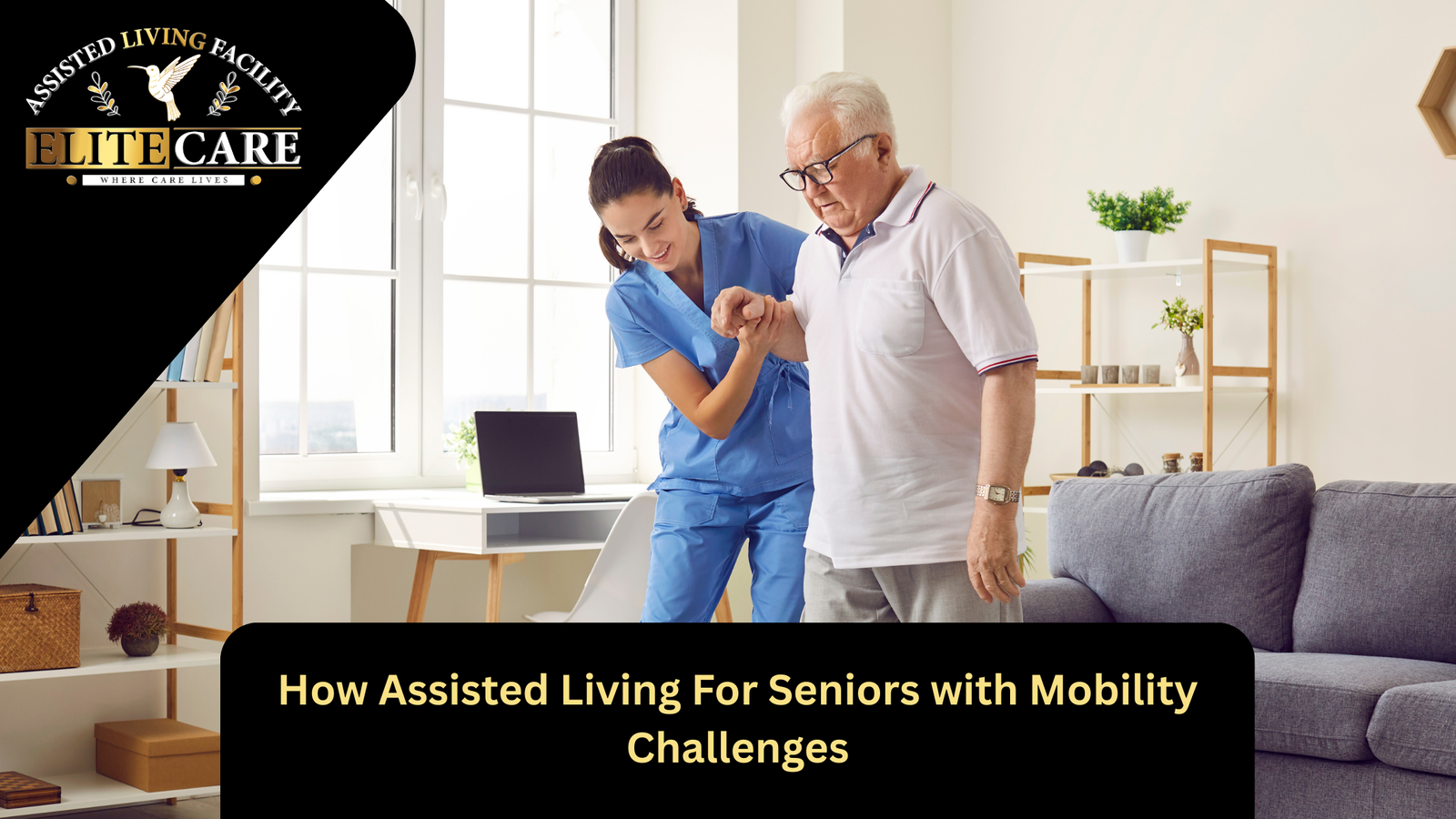
Assisted living for seniors with mobility challenges is designed to provide safety, dignity, and daily support without sacrificing independence. If you’re researching options for a parent—or planning for yourself—understanding how mobility-focused care works can help you make a confident, informed decision.
Mobility changes are one of the most common reasons families explore assisted living. From arthritis and stroke recovery to balance disorders, physical limitations increase fall risk and reduce quality of life. In this guide, we’ll cover:
- Common mobility challenges seniors face
- How assisted living reduces fall risks
- What daily mobility support looks like
- How care preserves independence
- Why mobility assistance improves well-being
Who This Guide Is For
This guide is helpful for:
- Families noticing increased falls or instability
- Seniors recovering from surgery or stroke
- Adult children evaluating safer care options
- Caregivers struggling to manage mobility risks
When mobility becomes unpredictable, structured support provides stability and peace of mind.
Common Mobility Challenges in Seniors
Mobility issues often develop gradually, making early support important.
Arthritis
Arthritis can cause:
- Joint stiffness
- Chronic pain
- Limited range of motion
- Difficulty standing or walking
Even bathing or dressing may require mobility support for elderly residents.
Reduced movement due to pain can weaken muscles and increase fall risk, making consistent assistance essential.
Stroke Recovery
After a stroke, seniors may experience:
- Muscle weakness
- Reduced coordination
- Balance problems
- Difficulty with transfers
Recovery requires structured movement and supervision. Many assisted living communities coordinate therapy to support strength and functional improvement during daily routines.
Balance Disorders
Balance disorders significantly increase fall risk. According to the Centers for Disease Control and Prevention, falls are a leading cause of injury among older adults.
Conditions like vertigo or neuropathy make walking unstable. Without proper senior mobility assistance, even short distances can become unsafe.
Nearly one in four adults over 65 experiences a fall each year, highlighting the importance of fall prevention in assisted living programs.
Fall Prevention Features in Assisted Living
One of the biggest advantages of assisted living for seniors is the built-in safety design.
Handrails & Wide Hallways
Handrails provide constant support, while wide hallways accommodate walkers and wheelchairs. Open layouts reduce tripping hazards and improve maneuverability.
Accessible Bathrooms
Bathrooms present a high fall risk. Assisted living communities typically include:
- Walk-in showers
- Grab bars
- Non-slip flooring
- Shower seating
These features reduce injuries while maintaining privacy.
Staff Supervision
Trained staff monitor residents throughout the day and notice changes in balance or gait early. This proactive fall prevention assisted living approach reduces emergencies.
Routine Fall Risk Assessments
Communities regularly evaluate:
- Walking stability
- Medication side effects
- Vision and footwear
- Strength changes
Early intervention prevents accidents before they happen.
Daily Assistance with Transfers & Movement
Mobility support ensures safe movement during daily activities.
Safe Walking Support
Caregivers provide:
- Guided walking
- Walker stabilization
- Gait monitoring
- Encouragement
Consistent senior mobility assistance helps maintain strength and confidence.
Bed-to-Chair Transitions
Transfers are high-risk moments. Staff assists with:
- Bed-to-wheelchair transfers
- Standing transitions
- Bathroom positioning
- Transportation support
Professional mobility support for elderly residents reduces strain and injury risk.
Coordinated Therapy Support
Many communities collaborate with therapists to support:
- Post-surgical recovery
- Strength building
- Balance improvement
This connection between therapy and daily life improves long-term mobility outcomes.
Preserving Independence While Providing Help
Assisted living does not eliminate independence. In fact, structured support often protects it.
In well-designed assisted living for seniors, help is personalized. For example:
- Some residents need only supervision
- Others require help during bathing
- Stroke survivors may need transfer assistance
Support adjusts as needs change.
Personalized Mobility Care Plans
Residents typically receive:
- Mobility evaluations
- Customized assistance plans
- Ongoing reassessments
- Care adjustments
When seniors feel safe, they are more likely to:
- Join activities
- Exercise regularly
- Maintain routines
Mobility assistance enables participation rather than limiting it.
Why Mobility Support Improves Quality of Life
Mobility-focused care improves both safety and overall well-being.
1. Reduced Fear of Falling
Fear of falling often leads to inactivity. Reliable fall prevention assisted living reduces anxiety and encourages safe movement.
2. Improved Physical Health
Regular assisted movement:
- Maintains muscle tone
- Supports flexibility
- Encourages circulation
- Reduces sedentary behavior
Staying active helps preserve long-term mobility.
3. Emotional Well-Being
Safe movement restores confidence and reduces stress. Feeling secure physically improves overall outlook.
4. Social Engagement
Mobility allows seniors to dine with peers, attend events, and stay socially connected, reducing isolation.
5. Reduced Hospitalization Risk
Falls are a major cause of emergency visits. By prioritizing assisted living for seniors with structured safeguards, communities reduce severe injury and hospital stays.
Preventing serious falls protects independence.
Comparing Assisted Living to In-Home Mobility Support
Families often consider in-home care first.
While helpful in the short term, assisted living offers:
- Safety-focused building design
- 24/7 staff
- Immediate emergency response
- Continuous monitoring
- Structured engagement
For progressive mobility decline, a supervised environment offers stronger long-term protection.
Common Mistakes Families Make When Evaluating Mobility Care
Choosing the right assisted living for seniors requires careful evaluation.
Avoid:
- Prioritizing aesthetics over safety
- Ignoring staff training
- Overlooking therapy coordination
- Assuming all communities offer the same support
Ask about fall prevention, emergency response, and mobility reassessments.
How to Evaluate Mobility Support in an Assisted Living Community
When touring, ask:
- How often are mobility reassessments done?
- What transfer training do caregivers receive?
- Is therapy coordinated on-site?
- How are falls tracked and prevented?
Clear answers indicate structured and reliable care.
Conclusion
Mobility challenges should never take away a senior’s independence or quality of life. The right assisted living community provides a safe environment, trained caregivers, strong fall prevention measures, and personalized mobility support to help residents move with confidence. At Elite Care Assisted Living, we focus on making daily life safer and more comfortable for every resident. With the right support in place, seniors can stay active, enjoy their routines, and feel secure each day. Choosing a community that truly prioritizes safety and compassionate care can make a meaningful difference in long-term well-being.
FAQs
1. What level of mobility support is provided? Care ranges from supervision to full transfer assistance, adjusted as needs evolve.
2. How does assisted living reduce fall risks? Through safety design, trained staff, and individualized mobility plans.
3. Is assisted living suitable after a stroke? Yes, many communities support recovery with structured assistance.
4. Can mobility improve in assisted living? With guided support, many residents maintain or improve strength and balance.
5. When should families consider assisted living? When falls increase or daily tasks become unsafe due to instability.
🗓️ Schedule a Personalized Care Consultation at Elite Care Assisted Living
Choosing the right assisted living for seniors isn’t just a decision—it’s a turning point for your family. And while online research helps, nothing compares to walking into a community, meeting the caregivers, and feeling the environment for yourself.
At Elite Care Assisted Living in Lakeland, families discover compassionate, mobility-focused, and resident-centered support backed by over 20 years of hands-on experience.
Licensed and regulated by the Florida Agency for Health Care Administration (AHCA License #14006), our community provides Limited Nursing Services (LNS) and Limited Mental Health (LMH) care, giving families peace of mind knowing their loved one is in capable, caring hands.
💛 Why Families Trust Elite Care
If you’re comparing Assisted Living vs. Home Care in Lakeland, here’s what sets us apart:
We don’t believe in one-size-fits-all care. Every resident receives a customized care plan tailored to their physical, emotional, and medical needs.
Our assisted living services in Lakeland are ideal for:
- Seniors needing mobility support or fall prevention assistance
- Individuals recovering from stroke or managing arthritis
- Seniors requiring help with medication management
- Those experiencing memory challenges, such as Alzheimer’s or dementia
- Families needing short-term respite or hospice support
- Seniors with chronic health conditions requiring supervision
If you’re unsure whether aging in place or assisted living is the safer option, a private consultation can help you make a confident, informed decision.
🌍 Proudly Serving Lakeland & Surrounding Areas
📍 Communities We Serve:
Lakeland · Winter Haven · Bartow · Auburndale · Plant City · Mulberry
🗺️ Counties We Serve:
Hillsborough · Osceola · Orange · Pasco · Hardee
🏡 What to Expect During Your Visit
When you schedule a private tour, you can:
- Walk through our secure, mobility-friendly community
- See our fall prevention safety features firsthand
- Meet our compassionate caregiving team
- Ask detailed questions about care plans and pricing
- Understand how we support independence while ensuring safety
There’s no pressure—just clarity. Often, seeing the environment in person answers questions that websites simply can’t.
📍 Connect With Elite Care Assisted Living
📍 Visit Us: 6017 Christina Dr E, Lakeland, FL 33813
📞 Call Today: 863-333-0311
📧 Email: elitegroupcare@gmail.com
🌐 Careers:https://elitegroupcare.com/career/
📱 Follow Us: Facebook | Instagram
💛 Elite Care — Where mobility support, memory care, and compassion come together in Lakeland, FL.
If you’re exploring assisted living for seniors with mobility needs, let’s talk. Schedule your personalized consultation today and take the first step toward safer, more supportive care.